

If you’ve ever dealt with a dog accident on your carpet, you know that a simple scrub with soap and water just doesn’t cut it. To get rid of that stubborn stain and lingering smell for good, you have to go deeper and neutralize the uric acid.
The best eco-friendly approach I’ve found over the years is a three-part process: first, blot up as much as you can, then treat the spot with a vinegar solution, and finally, use baking soda to draw out what’s left. This method works because it tackles the problem at a chemical level instead of just covering it up.
Why Are Dog Urine Stains So Tough to Get Rid Of?
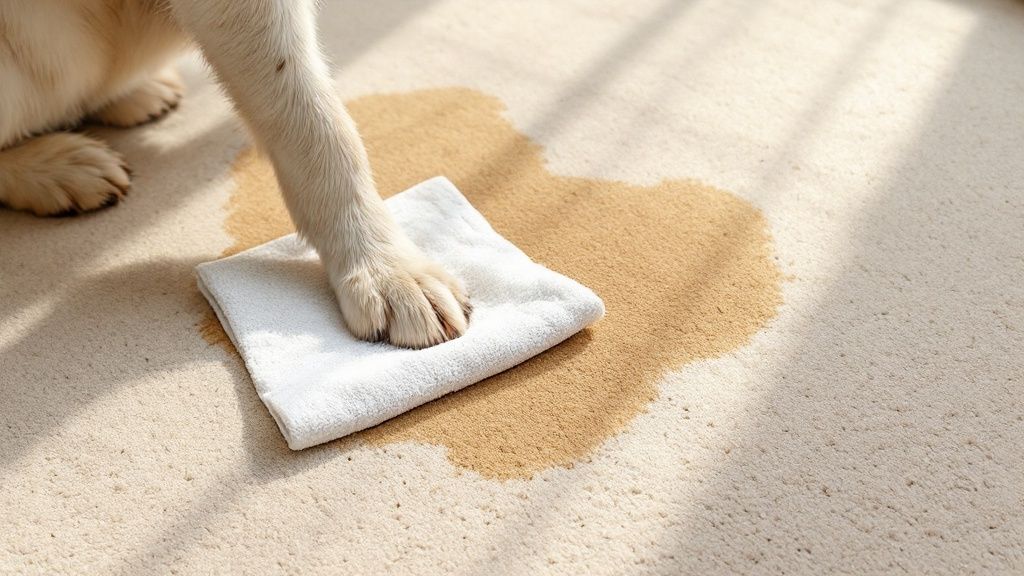
It’s a frustratingly common story. You clean up a pet stain, and it looks like it’s gone. But a few days later, it’s back. Or worse, the smell returns with a vengeance on a humid day. This happens for a very specific scientific reason, and it has everything to do with what gets left behind.
When dog urine dries, it forms uric acid crystals. The problem is, these crystals are sticky and don’t dissolve in water. That means regular household soaps and cleaners can’t break them down. So, while you might clean the visible spot, the invisible crystals remain. When they pull moisture from the air, the odour comes right back.
The Real Problem is Under the Surface
Think about it—urine is a liquid, so it doesn’t just sit on top of the carpet fibres. It seeps down, following gravity right into the carpet backing, the padding underneath, and sometimes even the subfloor itself. This turns a simple spot into a multi-layered mess.
The source of the smell is often hidden far below the surface you’re scrubbing.
Pet urine is more than just a surface stain; it creates an alkaline salt crystal residue after moisture evaporates. These crystals react with humidity, producing strong odours and fostering bacteria growth that may last for years if not professionally treated.
This deep saturation is why a tiny spot on the surface can create such a powerful, room-filling odour. The carpet padding acts like a sponge, holding onto the urine and its smell-causing components long after the carpet feels dry to the touch.
Why a Deep Clean is Absolutely Essential
Just covering up the smell or cleaning the top layer of your carpet is a temporary fix at best. To truly get rid of the problem, you need a method that neutralizes those uric acid crystals and deals with the contamination that has soaked deep into the carpet’s layers.
If you don’t, you’re not just dealing with recurring smells. The moisture and organic material in the urine can become a breeding ground for bacteria, which can affect your home’s air quality. Understanding this is the first step toward getting rid of that stain and odour for good. For a deeper dive, our guide on how to remove pet stains from carpet has even more detail.
The First Five Minutes: What to Do Immediately
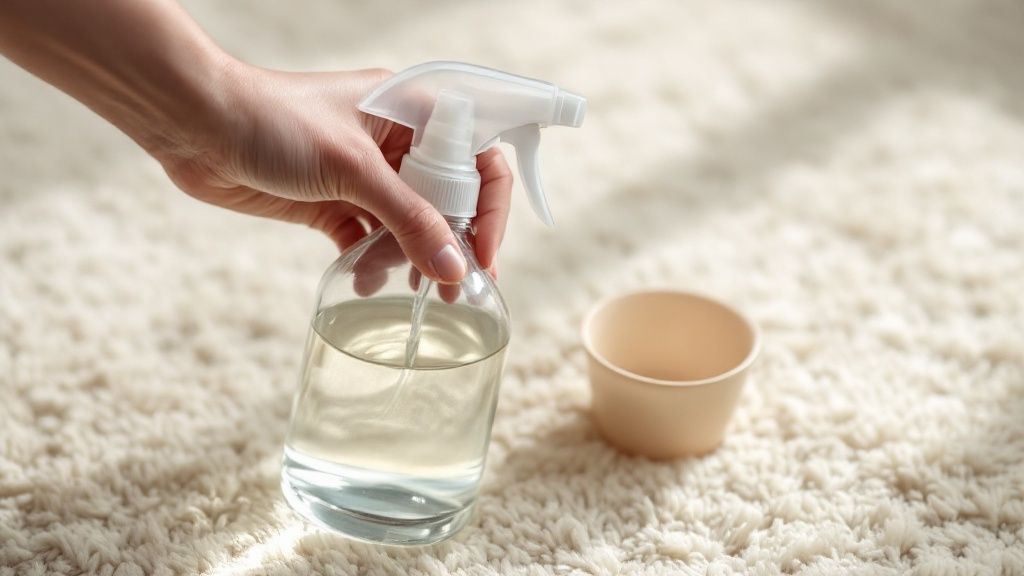
When your dog has an accident on the carpet, what you do in the first few minutes makes all the difference. Honestly, it’s a race against absorption. The goal is simple: get as much of the urine out of the carpet as possible before it soaks down into the padding.
Your first reaction might be to grab a scrub brush and go to town on the spot. Please, resist this urge. Scrubbing is probably the worst thing you can do right now. It doesn’t lift the stain; it just grinds the urine deeper into the carpet fibres and backing. You can even permanently damage the carpet pile, leaving a fuzzy, noticeable patch long after the stain is gone.
The Power of Blotting
The right approach is blotting. It’s a simple but incredibly effective technique that uses gentle pressure to draw the liquid up and out of the carpet. You’re pulling the urine out, not pushing it further in.
Here’s how to do it properly:
- Get the Right Tools: Grab a thick stack of plain white paper towels or a couple of clean, white microfibre cloths. It’s best to avoid anything with colours or patterns, as the dye can sometimes bleed onto your carpet, creating a whole new problem.
- Apply Firm, Even Pressure: Lay your towels over the wet spot and press down hard with both hands. Don’t be shy—you can even stand on the stack of towels to use your body weight for maximum absorption.
- Swap and Repeat: You’ll notice the towels quickly become soaked. Just swap them out for a fresh, dry stack and do it again. Keep repeating this process until the new towels are barely picking up any moisture.
Master the Technique
For a pro-level blot, always start from the outer edge of the urine spot and work your way toward the centre. This little trick stops you from accidentally spreading the liquid and making the stain bigger.
Once you’ve blotted all you can by hand, here’s an extra step. Place a final, dry stack of paper towels over the area and put something heavy and flat on top. A stack of books (wrapped in a plastic bag to keep them dry) works perfectly. Just leave it there for an hour or so to wick up any last bits of moisture from deep in the carpet.
A common mistake I see is under-blotting. People give it a quick once-over and think they’re done. But if you only get the surface, you’re leaving urine behind in the carpet pad, which is exactly where those stubborn, lingering odours come from. Be patient and thorough here.
This initial blotting step is crucial for any kind of liquid spill, not just pet accidents. For more general tips, our guide on how to clean carpet stains has some great advice. By getting these first five minutes right, you’ve already won half the battle, making the next steps for removing the stain and odour so much easier.
A Simple, Go-To Method for Fresh Stains and Odours
Okay, you’ve blotted up the worst of the fresh mess. Now it’s time to deal with what’s left behind on a chemical level. Before you reach for a bottle of harsh, store-bought chemicals, let me tell you about a method that works wonders. All you need are two simple, eco-friendly ingredients you probably already have in your kitchen: white vinegar and baking soda.
This isn’t just some old wives’ tale—it’s practical chemistry. The acetic acid in vinegar is brilliant at breaking down the stubborn uric acid in dog urine, which is the real culprit behind those smells that seem to linger forever.
Mixing Up Your Vinegar Solution
Your first weapon in this fight is a simple but powerful vinegar solution. You don’t need anything fancy, just a clean, empty spray bottle to get started.
Here’s the recipe:
- One part cool water
- One part distilled white vinegar
Just pour them into your spray bottle and give it a gentle shake. This 50/50 ratio is the sweet spot—strong enough to clean effectively without making your whole house smell like a fish and chip shop.
Once it’s mixed, spray the solution generously over the entire affected area. Make sure you go a couple of inches beyond the visible stain, as urine has a nasty habit of spreading out under the surface. You want to dampen the carpet fibres right down to the backing where the urine has likely soaked in.
This quick visual guide shows you just how simple the three-part process is.
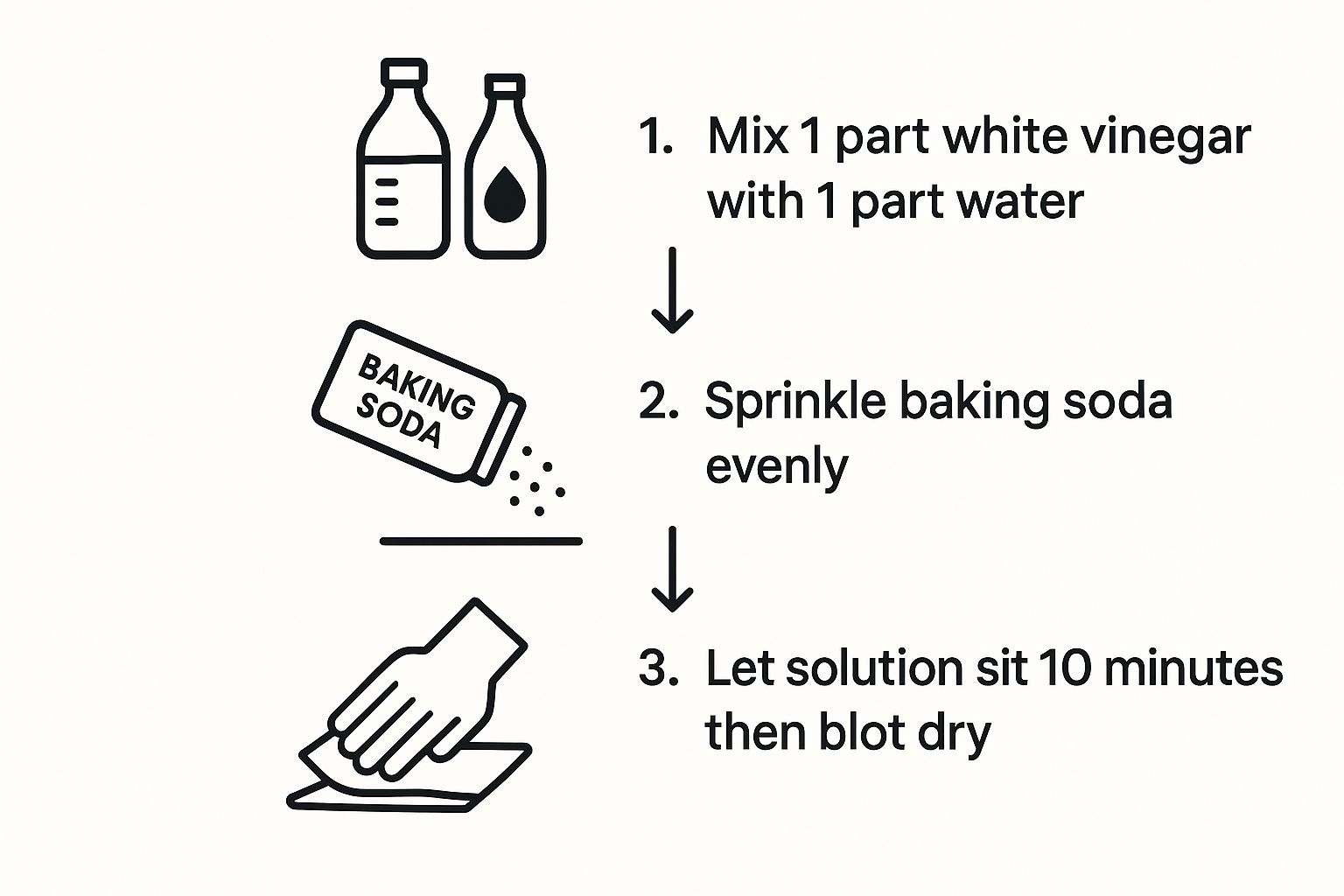
As you can see, the secret is in the sequence: neutralize with vinegar, absorb with baking soda, and then blot it all up.
Let the vinegar solution sit on the stain for at least 10 to 15 minutes. This dwell time is really important. It gives the acetic acid a chance to get to work and break down those pesky urine crystals.
After it’s had time to sit, grab a clean, dry cloth and blot the area again. Press firmly to lift as much of the vinegar solution out as you can, but resist the urge to scrub.
Using Baking Soda to Banish Odours
Now for the magic trick that tackles any leftover moisture and, more importantly, kills the odour for good. Get your box of baking soda and sprinkle a very generous layer over the entire damp patch.
Baking soda is a natural wonder for deodorizing and absorbing moisture. It will literally pull the last of the liquid—and the unpleasant smell—out from deep within the carpet fibres. Seriously, you can’t use too much, so don’t be shy.
Let the baking soda sit on the carpet until it’s completely dry. This could take a few hours, or even overnight if the spot was really saturated. You’ll know it’s ready when the baking soda feels dry and crusty.
Once it’s totally dry, it’s time to vacuum. Go over the spot a few times from different angles to make sure you suck up all the powder from the carpet pile. The stain should be gone, and the odour completely neutralized. For more in-depth strategies, check out our guide on how to remove stubborn pet odours from your carpet.
What to Do About Old, Set-in Dog Urine Stains
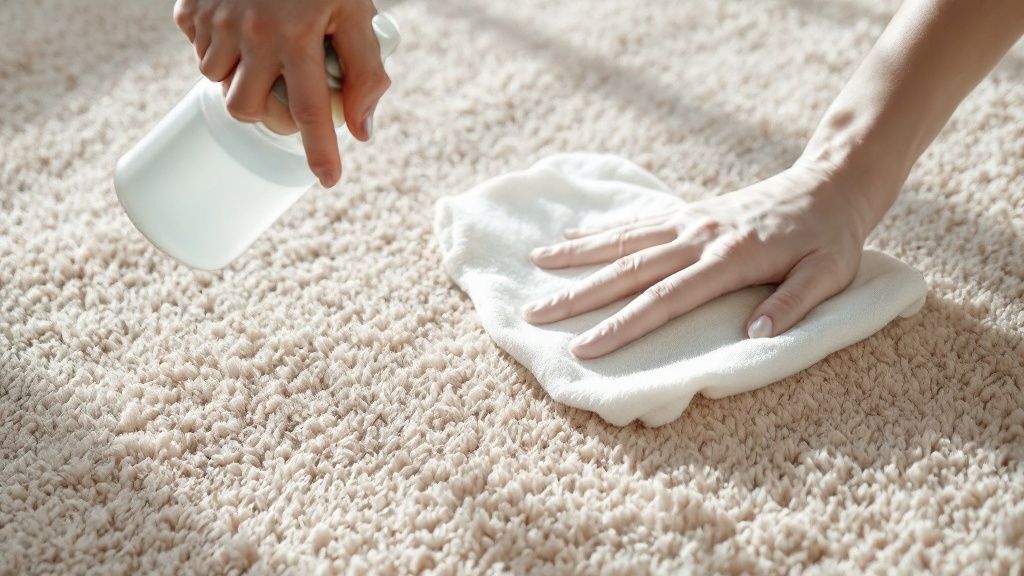
We’ve all been there. You move a piece of furniture or catch the light just right and spot it: a dried, yellowed dog urine stain you never knew was there. It’s a completely different beast from a fresh accident.
Once the liquid evaporates, it leaves behind highly concentrated uric acid crystals that have practically glued themselves to your carpet fibres. This is what creates that stubborn stain and lingering smell.
Don’t give up on your carpet, though. While set-in stains definitely need more muscle, they aren’t a life sentence. The trick is to rehydrate the spot first and then attack it with a cleaner that can break down the stubborn crystals that vinegar alone can’t handle.
First, Bring the Stain Back to Life
Before you can clean an old stain, you have to essentially make it “fresh” again. This is the only way to make those uric acid crystals vulnerable to your cleaning solution. Just spritzing a little water on top won’t cut it.
You’ll want to fill a spray bottle with plain, cool water. Mist the stain generously, making sure to cover the entire spot plus a few centimetres around the edges.
Now, walk away. Let the water sit and soak in for about 5-10 minutes. This gives it time to start dissolving those crusty crystals. Once it has sat for a bit, take a clean, white cloth and blot the area firmly to lift out as much of the initial residue as you can.
A Stronger DIY Solution for Tough Spots
If you’re working with a light-coloured carpet and need something with more punch, a carefully mixed hydrogen peroxide solution can be incredibly effective. Peroxide is a natural oxidizer, meaning it breaks down the chemical compounds causing both the stain and the odour.
Here’s a simple recipe I’ve used with great success:
- 120 ml (1/2 cup) of 3% hydrogen peroxide
- One teaspoon of plain, unscented dish soap
Gently combine these in a spray bottle or a small bowl. Once you’ve rehydrated and blotted the stain, apply this mixture. You should see a bit of gentle foaming, which is a great sign—it means the chemical reaction is underway.
A Crucial Word of Caution: Hydrogen peroxide can act like a mild bleach. Before you go all-in on a visible spot, you must test it on a hidden area of your carpet first. Try it inside a closet or under a sofa, let it dry completely, and check for any discolouration.
When to Call in the Big Guns: Enzymatic Cleaners
If you’re facing a really stubborn old stain, or if your carpet is dark and hydrogen peroxide is too risky, your best bet is a commercial enzymatic cleaner. These are the gold standard for pet accidents for a reason.
Enzymatic cleaners aren’t just soaps; they contain beneficial bacteria that produce specific enzymes. These enzymes are programmed to seek out and literally “eat” the organic matter in urine. They break down the uric acid and proteins into simple, harmless things like carbon dioxide and water.
When you reach for one of these products:
- Follow the instructions to the letter. Every brand is a bit different.
- Saturate, don’t just spray. You need the cleaner to penetrate as deeply as the urine did.
- Be patient. These cleaners need time to work—sometimes up to 24 hours. Many formulas even recommend covering the treated area with a damp towel to keep the enzymes active and working their magic.
This method is so effective because it doesn’t just mask the problem—it completely eliminates the stain and odour at the molecular level, ensuring they’re gone for good.
Knowing When It’s Time to Call a Professional
DIY methods are fantastic for tackling fresh accidents and even some older, stubborn stains. But let’s be realistic—sometimes, despite our best efforts, a pet urine problem is just too big or has soaked too deep for household solutions to handle.
Knowing when to wave the white flag and bring in a professional is key to saving your carpet and, frankly, your sanity.
One of the most telling signs is an odour that just won’t quit. If you’ve cleaned a spot multiple times, only for that unmistakable ammonia smell to creep back on a humid day, you’re likely dealing with a deeper issue. That’s a classic indicator that the urine has soaked right through the carpet fibres and is now living in the underpad.
Signs You Need Professional Help
The size and age of the stain are also huge factors. A very large accident or a spot where a pet has repeatedly urinated creates a super-concentrated zone of uric acid crystals. These have probably saturated the carpet padding and may have even seeped into the subfloor.
Once the problem gets to that level, the sprays and solutions you can buy at the store just can’t penetrate deeply enough to neutralize the source.
It’s probably time to call for backup if you notice:
- A lingering odour: No matter how many times you clean it, the smell always comes back.
- A massive stain: A large volume of urine has almost certainly soaked deep into the carpet’s layers.
- A repeat-offence spot: Multiple accidents in the same area compound the problem exponentially.
- A mystery smell: You can smell urine but can’t find the exact spot, suggesting multiple hidden stains.
What Professionals Do Differently
So, what’s the difference? Professional carpet cleaners don’t just show up with stronger soap. They come armed with specialized equipment and targeted chemical treatments that you simply can’t replicate.
Many services use powerful, truck-mounted hot water extraction systems. These machines flush the carpet and the underpad with a cleaning solution and then extract all that contaminated water with incredible suction power. It’s a deep clean that goes far beyond the surface.
Untreated pet urine seeps deep into carpet fibres and underpad, often reaching the subfloor where it causes persistent odours and bacterial growth. Professional services report that quick, thorough cleaning dramatically reduces these risks. Some firms even see over an 80% success rate in odour removal when stains are treated promptly.
Some companies even offer specific Pet Urine Removal Treatments (P.U.R.T.®) chemically designed to explode the urine crystals on contact, completely wiping out the source of the odour. These advanced techniques are simply out of reach for a DIY approach.
Deciding between tackling it yourself or calling in the pros can be tough, but our article exploring the benefits of professional carpet cleaning vs DIY can help you make the right call.
Questions We Hear All the Time About Dog Urine Cleanup
Even with a solid plan, you’re bound to run into a few tricky situations. Let’s walk through some of the most common questions I get from pet owners dealing with accidents, so you can handle whatever comes your way with confidence.
Can I Use These Homemade Cleaners on My Wool Carpet?
Wool is a natural fibre, so you definitely need to handle it with a bit more care. While the vinegar and baking soda mixture is pretty gentle, you absolutely must do a small spot test first. Pick a place no one will ever see, like inside a closet or under the sofa, before you go all-in on a visible stain.
A word of caution: steer clear of hydrogen peroxide when dealing with wool or even just dark-coloured carpets. It can act like a mild bleach and might leave a permanent faded spot. If you’re working with a valuable or delicate rug, your safest bet is always to call in a professional. It’s better than risking damage you can’t undo.
Are These DIY Solutions Actually Safe to Use Around My Pets?
Absolutely! That’s one of the best things about sticking with simple ingredients like vinegar and baking soda. They’re non-toxic, which makes them a much better choice for your home than a lot of the harsh chemical cleaners on the market, especially when you have curious pets or small children around.
That said, it’s still smart to keep your pets out of the room while you’re cleaning and the carpet is still damp. Once it’s completely dry and you’ve given it a good vacuum, the area is perfectly safe for everyone to come back and enjoy.
Remember, your real goal is to completely destroy the odour at its source. This not only makes your home smell fresh but also stops your dog from being drawn back to the scene of the crime.
How Can I Stop My Dog From Peeing in the Same Spot Again?
It all comes down to scent. Dogs have an incredible sense of smell, and they’ll return to a spot if even a trace of the old odour remains. The key is total odour elimination, which is exactly what the cleaning methods in this guide are designed for.
If you’ve cleaned the area thoroughly and the habit continues, it’s time to dig a little deeper.
- First, talk to your vet. You need to rule out any medical problems that could be causing the accidents.
- Try more frequent potty breaks. Sometimes, the solution is as simple as giving them more opportunities to go outside.
- Lean into positive reinforcement. Lavish your dog with praise and treats every single time they go in the right spot.
If you think it might be a behavioural issue like territorial marking, getting advice from a professional dog trainer can be a game-changer. They can give you specific strategies to tackle the root cause of the problem.
For those tough, set-in stains that a homemade solution just can’t handle, the expert team at SaraCares is here to help. With over 40 years of experience, we use eco-friendly, pet-safe products to give your carpets a deep, healthy clean. Get your free quote from SaraCares today!


