

To really get rid of pet stains for good, you have to go deeper than what you can see. The secret is using an enzymatic cleaner that actually breaks down the invisible uric acid crystals left behind by urine. Those crystals are the real source of stubborn smells. Acting fast by blotting up fresh accidents and steering clear of heat are also crucial first steps.
Why Pet Stains Are More Than Just a Surface Problem
That little discoloured spot on your living room carpet? It’s more than meets the eye. When a pet has an accident, the urine doesn’t just sit on the surface. It follows gravity, seeping down past the carpet fibres, soaking into the padding, and sometimes even reaching the subfloor.
This is exactly why a simple surface scrub never seems to work. You might get rid of the yellow stain, but most of the urine is trapped deep down, creating a hidden source of odour-causing bacteria. That visible spot might only be a few inches across, but the soaked area underneath can easily be two to three times larger.
The Science Behind That Lingering Smell
The main reason that pet smell just won’t go away is uric acid. While other parts of urine dissolve in water, uric acid is made of non-soluble crystals. These crystals latch onto carpet fibres and padding like glue, which is why standard soaps and detergents just can’t get them out.
When the spot dries, the smell might seem to disappear. But those crystals are just waiting for a bit of moisture to come back to life. On a humid day or if you try to steam clean the area, they release a potent burst of ammonia gas, making the smell suddenly worse than before. It’s why an old stain can reappear with a vengeance.
The real challenge isn’t the visible stain; it’s the invisible uric acid crystals that have bonded with your carpet fibres. Until you break down these crystals, the odour will always return, especially in humid conditions.
Why Pets Keep Going Back to the Same Spot
It’s not just about chemistry; there’s a behavioural reason, too. Your pet’s sense of smell is incredibly powerful and can easily pick up on the faint pheromones left in old urine spots, long after you can’t smell a thing. To them, that scent is a big sign that says, “This is an approved bathroom spot.”
This can lead to a frustrating cycle of re-soiling the same area. No matter how many times you clean it with regular household products, your pet’s sensitive nose knows the spot is still marked. To break the cycle, you have to completely eliminate the odour at a molecular level, removing that scent marker for good.
This is where specialized products are a must. An enzymatic cleaner is packed with good bacteria that produce enzymes designed to break down the uric acid, proteins, and fats in pet waste. Instead of just covering up the smell, these enzymes completely digest the source of the odour, turning it into simple things like carbon dioxide and water. Without this biological breakdown, you’re only cleaning the surface. Getting on top of these hidden issues is also key to a healthier home, and you can discover more about how regular carpet cleaning can prevent allergies and improve indoor air quality.
Your First Response Plan for Fresh Carpet Accidents
When you find a fresh pet accident, you have to act fast. What you do in those first few minutes makes all the difference between a quick cleanup and a permanent stain that haunts your carpet forever. The main goal is simple: get as much liquid out as possible before it soaks through to the carpet padding and subfloor.
Whatever you do, don’t start scrubbing like crazy. It’s a natural reaction, but it’s the worst thing you can do. Frantic scrubbing just grinds the mess deeper into the carpet fibres and spreads the stain, turning a small spot into a much bigger problem.
Instead, the magic word is blot. Grab a thick stack of plain white paper towels or a clean, absorbent white cloth. Press down firmly on the wet area, letting the towels soak everything up. Keep swapping out the wet towels for dry ones and repeat until you can’t pull any more moisture from the carpet. A little patience here goes a long way.
Mixing Your Initial Defence
Once you’ve blotted the area as dry as you can get it, it’s time for a simple, eco-friendly pre-treatment. This isn’t the deep clean just yet—it’s about neutralizing the acids in the urine before they have a chance to damage the dye in your carpet.
All you need is a quick mix of one part white vinegar to one part cool water in a spray bottle. Give the affected area a light misting, but be careful not to soak it. The vinegar is great at neutralizing the ammonia in urine, which starts tackling the odour right away. Let that solution sit for about five to ten minutes.
After it’s had a moment to work its magic, grab a fresh set of paper towels and start blotting again. This time, you’re soaking up the vinegar solution and any urine it’s pulled out. This step is a game-changer for minimizing damage and makes the real cleaning process much more effective later on. For more advanced tips, our full guide on how to clean carpet stains has you covered.
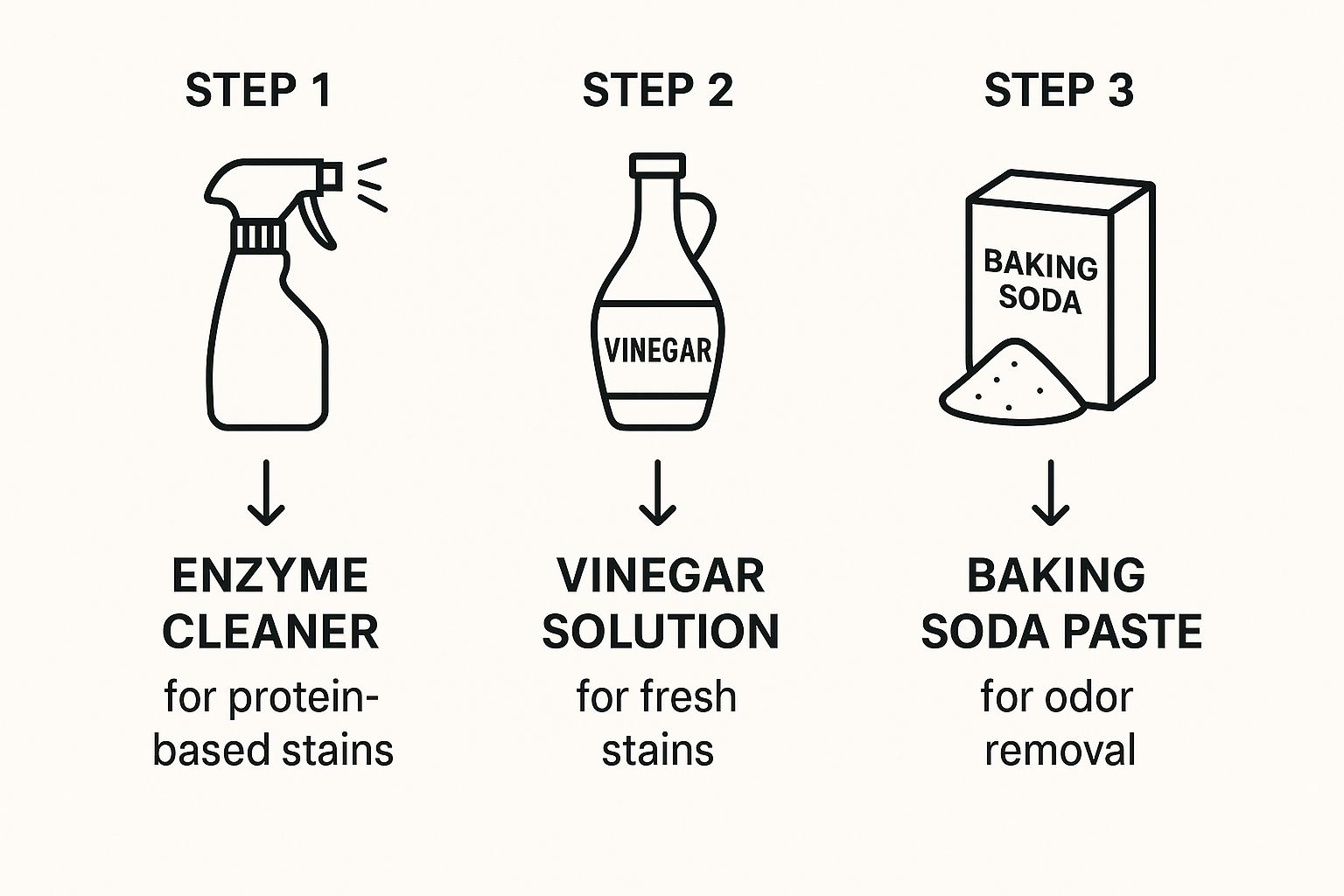
As you can see, different situations call for different solutions, from enzymatic cleaners for tough protein stains to simple vinegar solutions for immediate action.
Critical Mistakes to Avoid Immediately
Knowing what not to do is just as important as knowing what to do. Some common cleaning “wisdom” can actually set a pet stain permanently, making it impossible to get out.
There are two things you must avoid at all costs: heat and ammonia-based cleaners.
- Heat: Never, ever use a steam cleaner or even hot water on a fresh urine stain. The heat actually cooks the proteins from the urine right into the carpet fibres, permanently bonding the stain to your carpet.
- Ammonia: A lot of general-purpose household cleaners contain ammonia, but using them on pet urine is a huge mistake. Urine already contains ammonia, so adding more can actually attract your pet back to the same spot to do their business again. It’s like putting up a “go here” sign for them.
When you’re dealing with a fresh accident, a quick and correct response is your best bet. Here’s a little cheat sheet to help you remember the essentials.
DIY Stain Removal Do’s and Don’ts
| Action | Why It Works (or Doesn’t) | Tool/Ingredient |
|---|---|---|
| Blot Immediately | Lifts liquid out of the fibres without spreading the stain. | White Paper Towels / Clean Cloth |
| Avoid Scrubbing | Scrubbing grinds the stain deeper and damages carpet fibres. | N/A |
| Use Cold Water | Helps dilute the stain without setting it like heat does. | Cool Tap Water |
| Apply a Vinegar Solution | Neutralizes ammonia and helps break down the urine. | White Vinegar |
| Never Use Heat | Heat chemically bonds urine proteins to fibres, setting the stain. | Steam Cleaner / Hot Water |
| Avoid Ammonia Cleaners | Attracts pets back to the same spot to re-mark their territory. | Ammonia-Based Products |
By following this immediate response plan, you give yourself the best possible chance of removing the stain completely. This initial damage control sets you up for success when it’s time for a more thorough cleaning later on, keeping your carpet fresh and clean.
Tackling Old Stains and Lingering Odours
We’ve all been there—you discover a pet stain that’s already dried. This is a whole different ball game. Once urine has had time to dry, it bonds tightly with the carpet fibres. The uric acid crystals are fully formed, and that’s what creates that stubborn, lingering smell that seems to last forever.
For these set-in messes, the simple vinegar spray for fresh accidents just won’t cut it. You need something with a bit more oomph. Luckily, you can get fantastic results without resorting to harsh chemicals. A couple of common household items can create a powerful reaction to break down the compounds causing both the stain and the odour.
The Baking Soda and Peroxide Power Combo
One of the most effective DIY recipes I’ve seen for old pet stains brings together the deodorizing magic of baking soda and the oxidizing power of hydrogen peroxide. When they mix, they create a chemical reaction that actively dissolves the uric acid crystals and helps lift that tell-tale yellowing from your carpet.
Before you go all in, you must do a spot test. Seriously, don’t skip this. Find a hidden spot—inside a closet, under the couch—and apply a small amount of your cleaning mix. Let it dry completely to make sure it doesn’t cause any discolouration. Every carpet is different.
Here’s the simple but potent recipe:
- Lay Down the Baking Soda: Start by generously sprinkling dry baking soda directly onto the old stain. You want a solid, complete layer covering the entire spot. Baking soda is a natural deodorizer and will get to work immediately, absorbing those smells.
- Mix the Solution: Grab a spray bottle and combine half a cup of 3% hydrogen peroxide with one teaspoon of plain, unscented dish soap. Gently swirl the bottle to mix everything together. Try not to shake it too hard, or you’ll end up with a bottle full of foam.
- Spray and Let It Work: Carefully spray the peroxide solution over the baking soda. You want it to be damp enough to start fizzing—that fizz is the sound of the reaction breaking down the stain! Now, just let it sit until it’s completely dry. This might take several hours or even overnight.
As the mixture dries, it works like a magnet, pulling the stain up from deep within the carpet fibres. Once it’s bone dry, use a stiff brush to break up the crusty residue, then vacuum the area thoroughly. You’ll probably need to go over it a few times to get all the powder up.
When to Bring in the Enzymatic Cleaners
While that DIY solution is a fantastic first line of defense, some stains are just too stubborn. That’s when it’s time to call in the specialists: enzymatic cleaners. These aren’t your average carpet shampoos. They contain beneficial bacteria that produce enzymes specifically designed to digest the organic proteins found in pet waste.
Think of it this way: the enzymes are tiny little helpers that literally “eat” the uric acid and other compounds that cause the stains and smells. They break everything down into harmless carbon dioxide and water. It’s the most thorough way to eliminate a pet stain because it deals with the problem at a molecular level.
When you’re at the store, always look for the word ‘enzymatic’ or ‘enzyme formula’ on the label. This is your guarantee that the product is made to break down the biological source of the stain, not just cover up the smell.
The secret to using an enzymatic cleaner effectively is saturation. You have to use enough of the product to soak all the way through the carpet fibres and reach the padding underneath, just like the original accident did. Follow the instructions on the bottle, which usually means letting the cleaner sit for a few hours so the enzymes have time to work their magic before you blot the area dry.
For a deeper dive into getting rid of those smells for good, check out our detailed guide on how to remove pet odors from your carpet. With these methods in your arsenal, you can confidently tackle even the oldest, most set-in pet stains and get your home smelling fresh again.
Common Cleaning Mistakes That Can Ruin Your Carpet
When you spot a pet stain, your first instinct is to scrub it away immediately. That’s the right impulse! But in your rush, you can accidentally make the problem much worse. The wrong method can turn a simple cleanup into a permanent blemish on your floor.
Knowing what not to do is just as important as knowing the right steps. Lots of popular “cleaning hacks” can actually set stains permanently, wreck your carpet fibres, and lock in odours. Before you reach for a random cleaner under the sink, let’s walk through the biggest mistakes we see people make.
The Problem with Heat and Steam
It seems to make sense, right? Use a steam cleaner or hot water to blast a tough stain into oblivion. While heat is great for dissolving everyday dirt and grease, it’s a disaster for pet urine.
Urine is full of proteins. When you hit those proteins with high heat, a chemical reaction happens that’s a lot like cooking an egg. The heat fuses the proteins directly to the carpet fibres. Once that happens, the stain is chemically bonded and nearly impossible to get out, no matter what you try later.
Using a steam cleaner on a pet stain is like ironing a stain onto a shirt. The heat will lock in the discolouration and the odour-causing proteins, creating a permanent mark on your carpet.
Always, always use cool or lukewarm water when you’re dealing with biological stains like urine. This will help dilute the spot without triggering that permanent chemical bond.
Why Ammonia Is Not Your Friend
Ammonia is a powerful ingredient found in many all-purpose cleaners and DIY recipes. It has its uses, but cleaning up after your pet is definitely not one of them.
Here’s the problem: pet urine already contains ammonia. When your dog or cat smells ammonia on the carpet, their brain immediately thinks another animal has marked that spot. This actually encourages them to go in the exact same place again, trapping you in a frustrating cycle of cleaning and re-soiling.
Instead of an ammonia-based cleaner, grab an enzymatic one or a simple vinegar solution. These will neutralize the ammonia in the urine instead of adding more to the mix. The same logic applies to furniture, which you can read more about in our guide to common cleaning blunders that may damage your upholstery.
The Danger of Overwetting Your Carpet
When you’re fighting a stubborn stain, it’s so tempting to just douse it with cleaner and water. More is better, right? Unfortunately, no. Overwetting your carpet can create a whole new set of headaches.
All that extra liquid soaks right through the carpet fibres and seeps deep into the padding and even the subfloor underneath. This leads to a few major issues:
- Sticky Residue: Using too much soap-based cleaner without rinsing it completely leaves behind a tacky film that attracts dirt like a magnet.
- Wicking: As the padding underneath dries, it can push old, trapped dirt and stain particles back up the carpet fibres to the surface. That’s why you sometimes see a stain reappear days after you thought you cleaned it.
- Mould and Mildew: Trapped moisture is the perfect breeding ground for mould and mildew. This not only leads to musty smells but can also become a health concern.
Avoiding these cleaning mistakes is crucial. Persistent issues like pet stains can even be flagged when you prepare for a home inspection, potentially affecting your home’s value.
Often, DIY attempts just push the problem deeper. In fact, professional services report that over 60% of DIY cleaning jobs leave urine crystals and bacteria embedded deep in the carpet, making odours worse and encouraging pets to revisit the spot. By steering clear of these common errors, you’ll protect your carpet and make your cleaning efforts count.
Knowing When to Call in a Professional Carpet Cleaner
Sometimes, despite your best efforts, a pet stain just won’t budge. You’ve blotted, sprayed, and scrubbed, but a faint shadow or that nagging odour remains. This is where you have to know when to wave the white flag. Calling a professional isn’t admitting defeat; it’s the smartest move to solve the problem for good and protect your carpet.
Recognizing the limits of at-home methods is key. If you feel like you’re stuck in a frustrating loop, cleaning the same spot over and over, it’s a pretty clear sign the problem has gone deeper than the surface fibres. When your store-bought cleaner just can’t cut it, it’s time for the experts.
The Telltale Signs You Need a Pro
So, how do you know when you’ve hit that wall? There are a few red flags that tell you a stain has soaked through the carpet and into the padding or even the subfloor. At that point, it’s well beyond what most household equipment can handle, and ignoring it can lead to permanent damage.
Keep an eye out for these dead giveaways:
- The Reappearing Stain: You clean a spot, it looks perfect, but a day or two later, a faint, yellowish-brown stain resurfaces. This classic problem is called “wicking.” It happens when moisture deep in the padding evaporates, pulling trapped stain particles right back up to the carpet tips.
- That Lingering Odour: You can’t see the stain anymore, but on a humid day, that unmistakable pet smell returns. That means the odour-causing uric acid crystals are still active deep down, just waiting for a little moisture to “reactivate.”
- Large or Repeated Accidents: If a pet has had several accidents in the same general area or the initial stain was quite large, you can almost guarantee it has saturated the padding. Only a professional can effectively flush out a zone that soaked.
- Old, Set-In Stains: Stains that have been there for weeks, months, or even years have had plenty of time to chemically bond with the carpet fibres. Breaking those bonds requires much stronger treatments than what you can buy at the store.
When you’re dealing with wicking or a smell that won’t quit, you’re not just cleaning carpet anymore—you’re fighting a problem embedded in the layers beneath. Professional intervention is your best shot at complete removal.
What Professionals Do Differently
What kind of magic are the pros using? It really comes down to two things: powerful, commercial-grade equipment and specialized cleaning agents you just can’t get off the shelf. Their methods are far more advanced than a simple surface clean.
Here in Canada, experienced technicians have this down to a science. They’ll often start with a special UV light to find every single affected spot, including old ones you never even knew were there. Then, they apply powerful enzyme treatments designed to break down urine crystals and bacteria at a molecular level. This is key—it eliminates the source of the odour instead of just masking it. You can find more details on these advanced pet stain and odour removal techniques that professionals use.
Their most important tool is usually a hot water extraction machine, which is worlds away from a rental unit. It injects a high-pressure stream of hot water and cleaning solution deep into the carpet and padding, dislodging every trace of the stain. Almost instantly, its incredibly powerful vacuum sucks all the dirty water and dissolved grime back out. This deep flushing and immediate extraction is what truly cleans the carpet and prevents the moisture issues that cause wicking and mould.
Frequently Asked Questions About Removing Pet Stains
When you’re dealing with pet stains, it can feel like you’re navigating a minefield of conflicting advice. Even after you’ve cleaned up a few spots, you’re bound to run into some tricky situations.
Here, we’ll tackle some of the most common questions we hear from pet owners, offering clear, expert-backed advice to clear up the confusion so you can clean with confidence.
Can I Use a Regular Carpet Cleaner on Pet Stains?
It’s tempting, but using a standard, consumer-grade carpet cleaner on pet stains is a real gamble. The biggest problem is the heat. Many of these machines rely on hot water, which can literally cook the proteins in urine. This chemically bonds the stain to the carpet fibres, setting it permanently.
On top of that, their extraction power often isn’t strong enough to pull moisture all the way from the deep padding. You’re left with a damp, bacteria-friendly environment that allows odours to come roaring back once the carpet seems dry.
If you must use a machine, always pre-treat the area thoroughly with a high-quality enzymatic cleaner first. For deep-set or large stains, though, a professional service with commercial-grade equipment is a much safer and more effective bet.
How Do I Stop My Pet from Soiling the Same Spot?
This is one of the most frustrating challenges for any pet owner. Pets are creatures of habit and are drawn to spots where they can still smell their own urine—even if it’s completely undetectable to your nose. The only real solution is total odour elimination, not just masking the smell.
Here’s a simple but effective plan to break the cycle:
- Destroy the Scent: This is non-negotiable. Use an enzymatic cleaner to completely break down the uric acid crystals, removing the scent marker that attracts them back.
- Make the Area Unattractive: Once the spot is clean and dry, change its appeal. Try placing a piece of furniture over it or using a pet-safe deterrent spray with citrus or bitter apple scents, which most pets can’t stand.
- Address the Root Cause: Take a moment to think about why the accident happened. Is their litter box pristine? Do they have easy and frequent outdoor access? It’s also wise to consult a vet to rule out any underlying medical issues.
The most important step in preventing re-soiling is destroying the scent on a molecular level. If your pet can still smell it, they will see it as an approved bathroom spot.
Are Eco-Friendly Pet Stain Removers Effective?
Absolutely. In fact, many of the most powerful pet stain removers on the market are eco-friendly.
The gold standard for pet messes, enzyme-based cleaners, are a perfect example. These products use natural, beneficial bacteria that produce enzymes to literally digest the organic compounds in pet waste. It’s an incredibly powerful biological process that breaks down stains and odours at their source without any harsh chemicals.
DIY solutions built around simple ingredients like white vinegar and baking soda are also fantastic natural options, particularly for neutralizing odours and lifting fresh stains. When you’re shopping, look for labels that say “enzyme formula,” “biodegradable,” and “non-toxic” to ensure it’s both safe for your home and powerful enough to get the job done right.
How Quickly Does a Pet Stain Become Permanent?
There isn’t a precise countdown clock, but the longer a pet stain sits, the higher the risk of it becoming permanent. The damage starts almost instantly.
Fresh urine is acidic and can begin to bleach or alter the dye in your carpet fibres right away. As it dries, the urine’s pH becomes alkaline, which can also cause permanent discolouration. Applying heat or using the wrong cleaning product can set a stain in just a few minutes.
The best rule of thumb? Treat every single accident as an emergency. Act as quickly as you possibly can. Even if you manage to remove the visual spot days later, the dye in the carpet itself may have already been permanently altered, leaving a faded patch that no amount of cleaning can fix. Speed is always your best defence.
When DIY solutions are no longer enough, SaraCares provides the professional expertise and powerful equipment needed to restore your carpets and eliminate pet stains for good. Learn more about our child-safe and pet-friendly cleaning services.


