

Before you even think about getting your Persian rug wet, we need to do a little detective work. Think of this as the essential prep stage—the steps you take now will determine whether your at-home cleaning is a success or a disaster. A few simple checks can save you from accidentally ruining a beautiful, and often valuable, piece of art.
Not every rug is a good candidate for a DIY clean. The age of the rug, the type of dyes used, and the fibres it’s made from all play a massive role. The goal here is to figure out if your rug can handle a gentle clean or if it needs to be handed over to the pros.
Your Pre-Cleaning Safety Checklist
Let’s walk through what you need to look for. This isn’t just about looking for dirt; it’s about assessing the rug’s very structure and stability.
The All-Important Colourfastness Test
This is the most critical test, and it only takes a minute. It tells you if the rug’s dyes will bleed when they get wet.
Find a small, hidden spot on your rug—a corner on the backside is perfect. Dampen a clean, white cloth with a bit of cool water. Now, press it firmly against the rug’s fibres and hold it there for about 30 seconds.
Lift the cloth. Is there any colour on it? Even the faintest smear of dye means the colours are not stable.
Key Takeaway: If you see any dye on your cloth, stop. Do not proceed with cleaning. This is your rug telling you it needs professional help. A pro has specialized techniques to stabilize the dyes before washing, preventing them from running together and creating a blurry mess.
Figure Out What Your Rug is Made Of
The material makes all the difference. Is it wool or silk?
Wool is the most common material and it’s pretty forgiving. It has natural oils (lanolin) that help repel dirt and stains, which often makes it a good candidate for a gentle home cleaning.
Silk, on the other hand, is a completely different story. It’s incredibly delicate and can be easily ruined by too much water, the wrong cleaning solution, or even just rough handling. If you have a silk rug, my advice is always to leave it to the experts.
Look for Existing Damage
Now, give your rug a close inspection. You’re looking for any weak spots that your cleaning efforts could make worse. Get down on your hands and knees and check for:
- Frayed Edges or Worn Fringes: Vigorous cleaning can easily cause these areas to unravel even more.
- Weak Spots or Small Holes: Water and the weight of a wet rug can put a lot of stress on these fragile areas, turning a small hole into a big one.
- Old Repairs: Do any previous repairs look solid? If they seem loose, cleaning could pull them apart.
Taking a moment to understand the dangers of cleaning a carpet yourself is always a smart move. When it comes to a piece as special as a Persian rug, a little bit of caution goes a very long way.
Getting Your Cleaning Supplies in Order
Before you even think about getting your Persian rug wet, let’s talk about supplies. Getting this part right is absolutely critical. Reaching for the wrong cleaner or a harsh brush is probably the quickest way to ruin the delicate fibres and natural dyes that make your rug so special.
This isn’t your standard wall-to-wall carpet clean-up. You need to be thoughtful and gentle from the very beginning.
The Right Tools for a Gentle Clean
First things first, let’s assemble your tool kit. The goal here is to find items that will clean effectively without snagging fibres or causing the intricate knots to fray. A heavy-handed approach will only cause damage.
Here’s what you’ll need to have on hand:
- A Vacuum (No Beater Bar!): This is a big one. The aggressive spinning bristles on a standard beater bar can tear at the wool fibres. You need to use a vacuum with a simple suction-only head or one where the beater bar can be switched off entirely.
- A Soft-Bristle Brush: Think of an upholstery brush or something with similarly soft, natural bristles. This is what you’ll use to gently work the cleaning solution into the rug’s pile.
- Clean White Towels or Sponges: You’ll need several of these for blotting and applying your cleaning solution. Always use white to avoid any chance of dye from the towel transferring onto your rug.
- Two Buckets: One will be for your cleaning mix, and the other will hold clean rinse water. Keeping them separate is key to a clean finish.
This handy infographic breaks down the core components of a safe and successful clean.
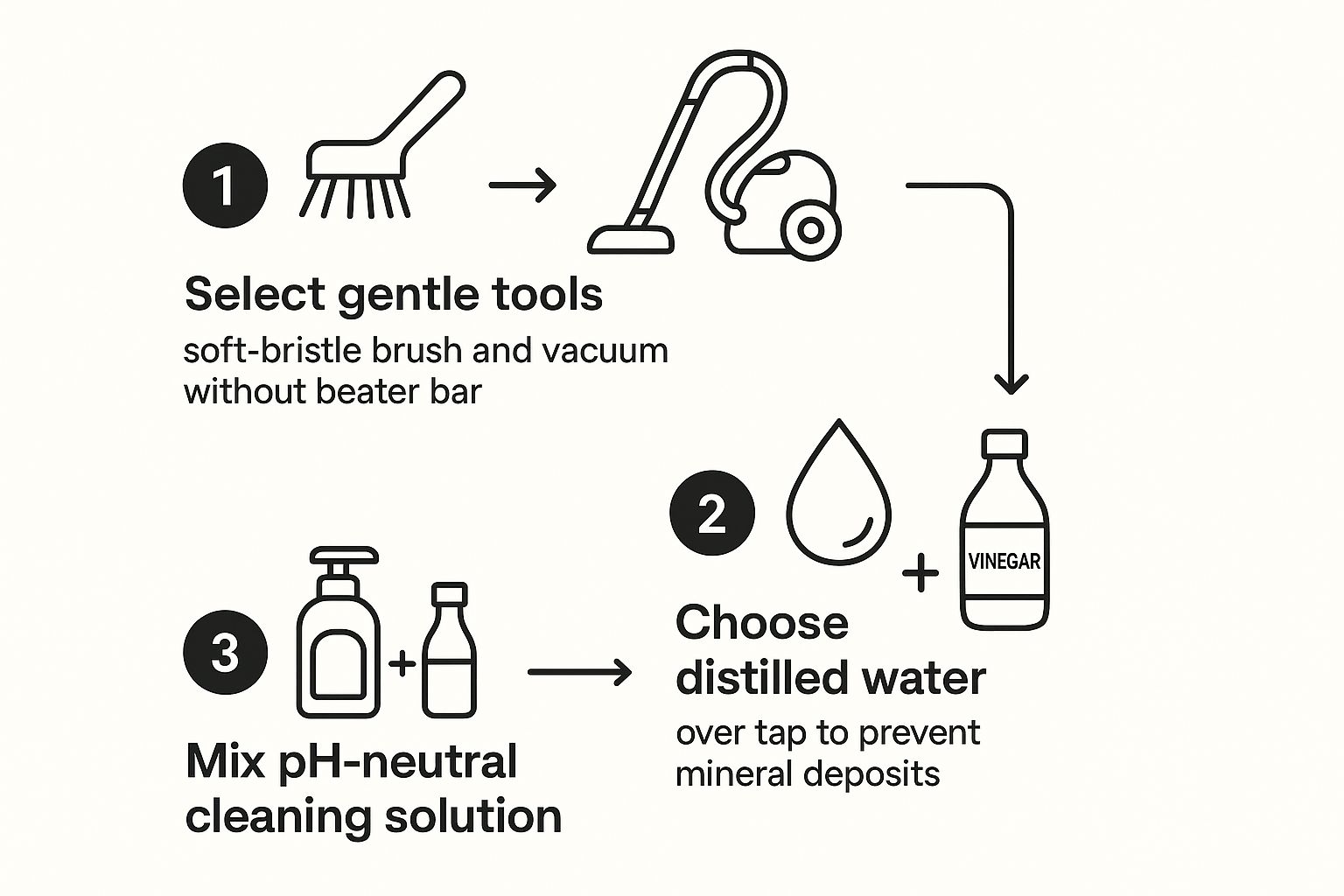
As you can see, it really boils down to three things: gentle tools, pure water, and a very mild cleaning solution.
How to Mix a Safe Cleaning Solution
Step away from the commercial carpet shampoos. Nearly all of them are far too harsh for a handmade Persian rug. Their high-alkaline formulas can strip the natural oils (lanolin) right out of the wool, making it feel dry and brittle. Worse, they can make those beautiful vegetable dyes run.
The good news is that you can mix a perfectly safe and effective solution yourself with a few simple ingredients.
Expert Tip: I always recommend using distilled water instead of water straight from the tap. Tap water often contains minerals and chlorine that can leave a dull, chalky film on the rug fibres once they dry.
Grab a clean bucket and mix these ingredients together:
- Start with four litres of cool, distilled water.
- Add one teaspoon of a clear, gentle, and unscented dish soap.
- Stir in two to three tablespoons of plain white vinegar.
The white vinegar is a fantastic addition. It acts as a natural brightener for the colours, helps neutralize any lingering odours, and does a great job of cutting through soap residue so your rug rinses clean.
For a broader look at cleaning different types of rugs, our guide on the best way to clean area rugs at home has some great pointers.
Now that you have your gentle supplies ready to go, you’re all set for the next stage.
A Step-by-Step Guide to Washing Your Rug
Alright, you’ve done your homework. You’ve confirmed your rug is safe to wash at home and you have your gentle cleaning supplies ready to go. Now, let’s get down to the actual washing.
We’re going to break this down into a few clear, manageable actions. The secret to success here isn’t brute force; it’s patience and a light touch. This isn’t just about scrubbing the surface—it’s about carefully lifting away the grime from deep within the rug’s foundation without damaging a single fibre.
Start with a Thorough Dusting
Before even thinking about water, you need to get all the dry soil out. I’m talking about the stuff a regular vacuum just can’t reach. No matter how powerful your machine is, it won’t pull out the heavy, deep-down grit and dust that settles into the base of the rug. Over the years, that grit acts like fine sandpaper, grinding away at the delicate wool fibres with every footstep.
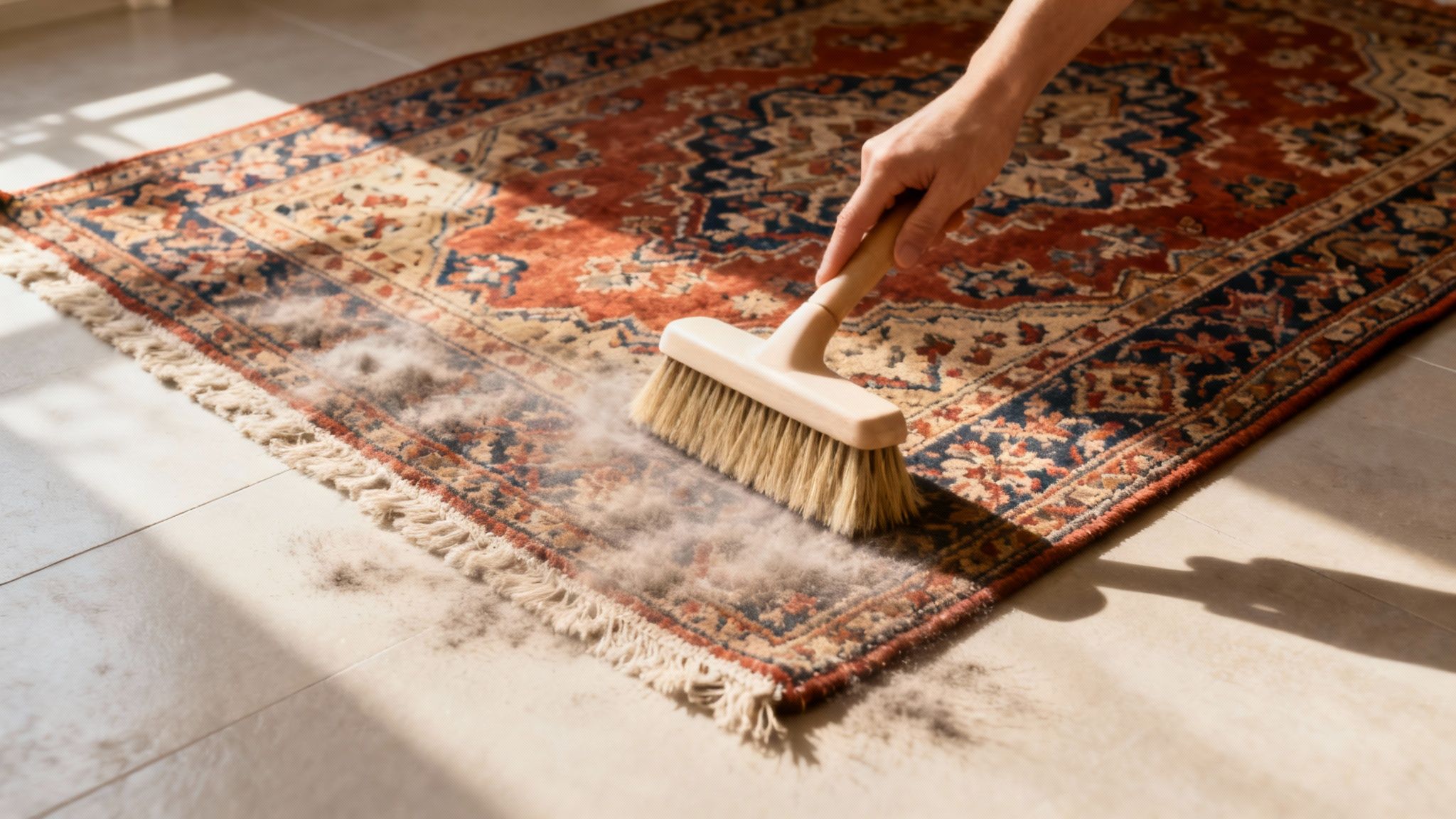
The best way to do this is to take your rug outside. Find a sturdy clothesline, a fence, or even a porch railing to hang it over. Then, using a rug beater or just the flat side of a clean broom, give the back of the rug a good, firm whack. You will be absolutely astonished by the cloud of dust that erupts.
Keep working your way across the rug, section by section, until you see very little dust coming off with each hit. Trust me, this single step makes a world of difference in your final results.
Why This Matters: From my experience, what most people call “dirt” is mostly dry particulate matter. Professionals estimate that up to 80% of the soil in a rug is dry. By getting it out first, you avoid turning all that dust into mud the second you add water. This makes the whole washing process much easier and far more effective.
Address Stains First
Once the deep-seated dust is gone, it’s time to zero in on any specific spots or stains. Apply a small amount of your cleaning solution directly onto the problem area.
Grab a clean, white cloth (so you don’t risk any colour transfer) or a soft sponge and gently blot the stain. Whatever you do, don’t rub or scrub. That’s the fastest way to push a stain deeper into the fibres or create a “fuzzy” spot where the texture is permanently damaged.
- Start blotting from the outside edge of the stain and work your way in. This keeps the stain contained.
- Use a dry part of the cloth to lift the moisture—and the stain along with it.
- Keep repeating this gentle blotting process until the stain disappears or has faded as much as it’s going to.
Washing and Rinsing Your Rug
Now for the main event. Find a clean, flat surface that can get wet, like a patio or a gently sloped driveway. Lay your rug out flat.
Dip your soft-bristle brush into your cleaning solution and start washing the rug in small, manageable sections. The most important rule here is to always brush in the direction of the pile. Never go against it. If you’re not sure, just run your hand across the surface; one direction feels smooth (that’s the one you want), and the other feels rough.
Go easy on the cleaning solution. Your goal is to clean the fibres, not to soak the rug’s foundation. A waterlogged rug is incredibly heavy, a nightmare to move, and takes forever to dry, which is a perfect invitation for mould and mildew.
After you’ve gently washed the entire surface, it’s rinsing time. Use a gentle spray from a hose or, if you don’t have one, buckets of clean, cool water. You need to rinse until the water running off the rug is completely clear and free of suds. Don’t rush this part—any soap residue left behind will act like a magnet for new dirt. While the principles are similar, you can find more general advice on how to wash a rug at home which can be helpful for smaller, less delicate household rugs.
The Final Step: Drying
Properly drying your Persian rug is every bit as crucial as washing it. First, remove as much water as you can. A floor squeegee works wonders for this—just push it gently across the rug, always moving in the direction of the pile.
Next, you need to get it somewhere to dry completely. Lay it flat, but out of direct sunlight, which can bleach the beautiful colours. If you can, elevate the rug on some blocks or a few patio chairs to get air circulating underneath it.
To really speed things up and ward off mildew, set up a few fans pointed at the rug. If you’re indoors, open the windows to create a good cross-breeze. Make a point to flip the rug every few hours so both the front and back dry evenly. Depending on the rug’s thickness and the humidity in the air, this could take a full day or two. Be patient; your rug must be 100% dry before it goes back on your floor. This is one of the key carpet cleaning methods used by professionals, who often have climate-controlled drying rooms to guarantee perfect, safe results.
Handling Spills and Ensuring Long-Term Rug Care
No matter how careful you are, life is messy. A dropped mug of coffee or a tipped glass of wine doesn’t have to mean the end for your prized Persian rug. The real secret to saving your rug lies in what you do in those first few moments.
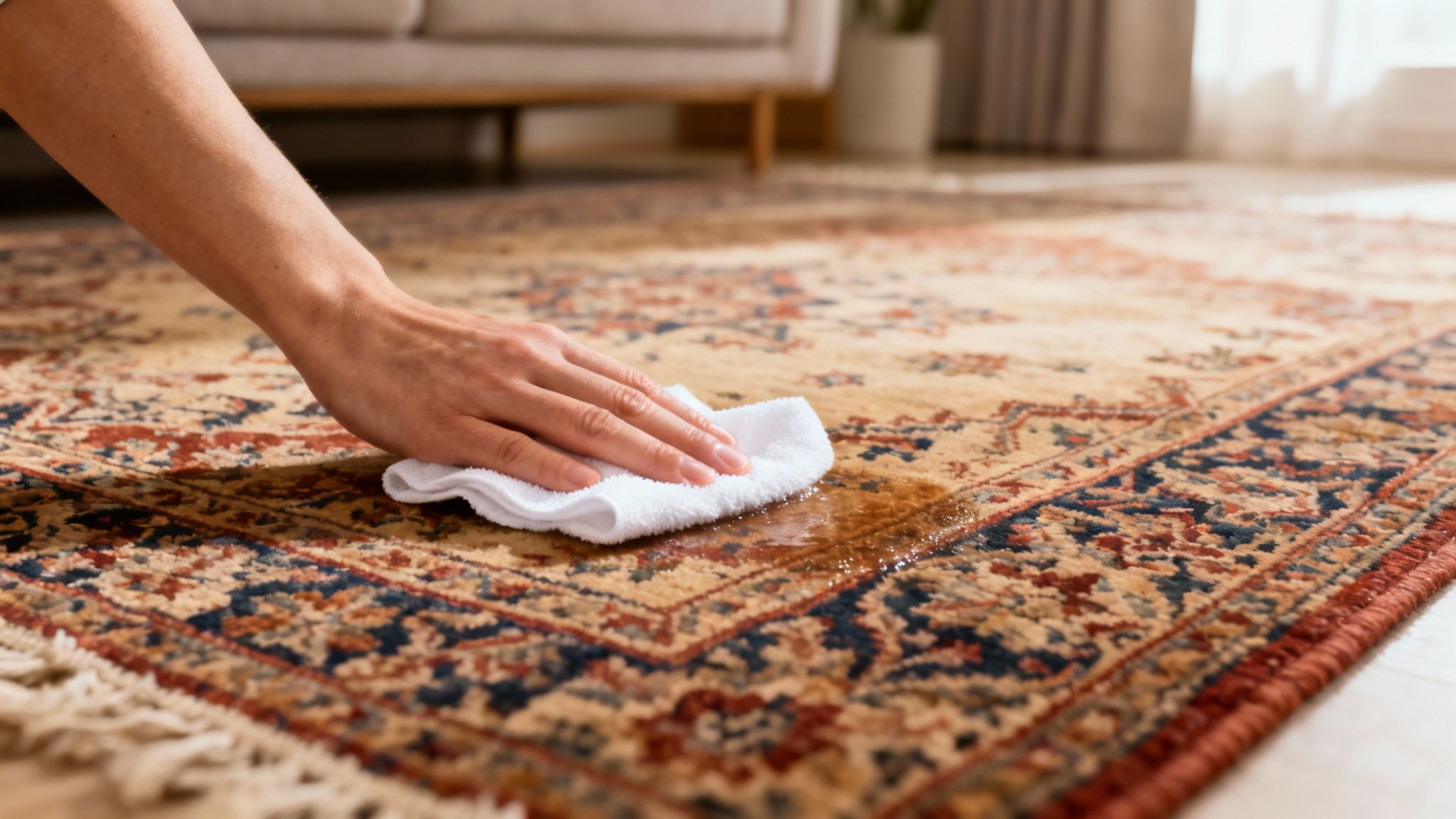
When a spill happens, your first instinct is your most important tool. The golden rule is simple: blot, never rub. Scrubbing a fresh spill only forces the liquid deeper into the delicate wool or silk fibres. This can set the stain permanently and damage the rug’s intricate pile.
Instead, grab a clean, white, absorbent cloth. Press it firmly down onto the spill, lift it, and use a fresh part of the cloth to repeat the process. Keep doing this until you can’t pull any more liquid out. It’s a simple step, but it makes all the difference. Many of the same ideas work for furniture, too—our guide on spot cleaning upholstery has some great tips that translate well.
From Emergency Response to Proactive Care
Once you’ve dealt with the immediate mess, it’s time to think about the bigger picture. A little proactive maintenance will do more to preserve your rug’s beauty and value than any emergency cleaning ever could.
Small, consistent habits are what truly protect your investment. Think of it less as a chore and more as a ritual. Here are a few things that have a huge impact:
- Rotate Your Rug Annually: Give your rug a 180-degree turn every six to twelve months. This simple act ensures foot traffic and sunlight are distributed evenly, preventing one side from wearing down or fading faster than the other.
- Invest in a Quality Rug Pad: A good rug pad is about more than just preventing slips. It acts as a shock absorber, cushioning the rug’s foundation from the impact of every footstep and reducing long-term stress on the fibres.
- Mind the Sunlight: The vibrant, natural dyes in a Persian rug are sensitive to UV light. If your rug sits in a sunny room, think about using sheer curtains or blinds to filter the harshest rays, especially during the middle of the day.
Creating a Sustainable Maintenance Routine
Putting a simple care calendar in place helps you stay on track without feeling overwhelmed. In many Canadian homes, especially those with pets and kids, accidents are just part of the deal. In fact, professional cleaners report that stains from wine, coffee, and pets can make up 20-25% of their work. They use a meticulous four-step process—dusting, washing, rinsing, and controlled drying—to safely lift these tough stains and get rid of any lingering odours.
A Simple Care Schedule:
- Weekly: Gently vacuum high-traffic areas. Make sure you’re using a suction-only setting, as a beater bar can tear the delicate fibres.
- Monthly: Vacuum the entire rug, taking the time to move furniture and get the areas underneath.
- Annually: Rotate the rug and give it a good look. Most rugs benefit from a professional deep cleaning every 12 to 18 months to stay in top shape.
This kind of routine is your best defence against the slow, grinding damage that embedded dirt can cause. It keeps the fibres from wearing down, ensuring your Persian rug remains a beautiful centrepiece in your home for many years to come.
When to Call a Professional Rug Cleaner
While a gentle at-home cleaning is perfect for regular upkeep, it definitely has its limits. Knowing when to step back and let an expert take over is just as crucial as knowing how to clean the rug yourself. Some situations just call for a level of skill and specialized equipment you won’t have lying around the house.
Think of it as protecting your investment. For a delicate antique, a high-value silk rug, or that family heirloom passed down through generations, the risk of causing irreversible damage just isn’t worth the savings of a DIY job. Professionals know how to handle fragile fibres and stabilize finicky dyes that could otherwise bleed and ruin those beautiful, intricate patterns.
Signs You Need Expert Help
Sometimes, the rug itself will tell you it’s time to call for backup. If you’re dealing with any of these issues, it’s a clear signal to pick up the phone.
- Lingering Odours: Those stubborn smells from pet accidents or mildew just won’t budge with surface cleaning. They’ve soaked deep into the rug’s foundation and need specialized enzyme treatments to be truly neutralized.
- Severe Water Damage: After a flood or a serious leak, your rug needs more than just a good drying. A professional can properly sanitize it to make sure mould and mildew don’t take hold deep within the fibres.
- Deeply Set Stains: That old wine or coffee stain that’s been there for who-knows-how-long requires stronger, yet fibre-safe, solutions and techniques to lift it without stripping the rug’s colour.
Key Takeaway: A professional cleaning isn’t just a more powerful wash; it’s a restorative process. It’s all about safely removing deep-seated contaminants, protecting delicate fibres, and preserving the rug’s beauty and value for years to come.
What Happens at the Rug Cleaner’s?
When you hand your rug over to a specialist, you’re not just getting a simple wash. You’re paying for a meticulous, multi-step system that’s impossible to replicate at home.
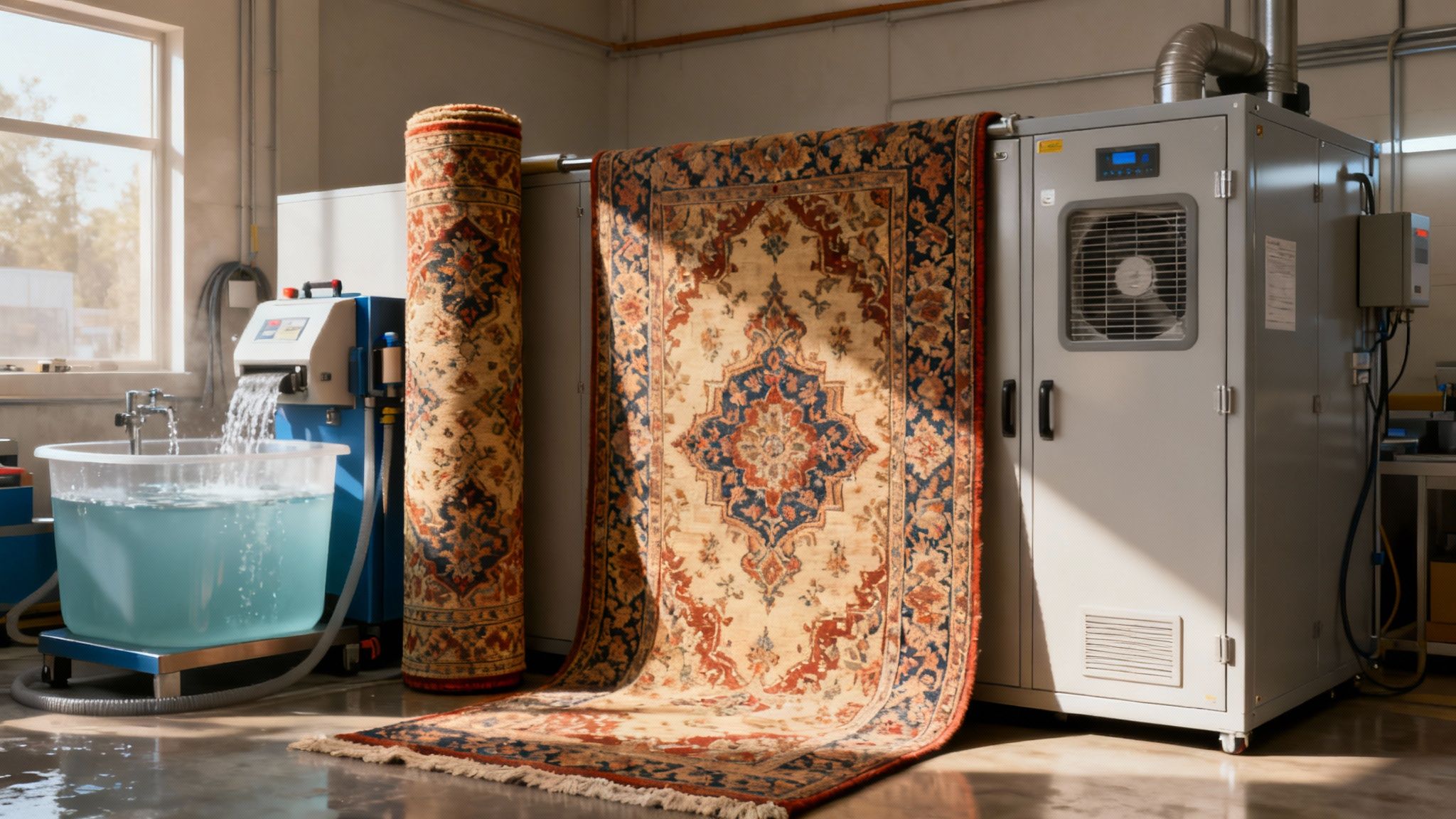
First, they’ll often use a special machine that gently vibrates the rug to shake loose years of compacted grit and soil from the very base of the pile. You’d be amazed how much abrasive dirt this step alone removes—the kind of stuff that slowly wears down fibres over time.
Next comes the wash itself. Many of the best facilities use full-immersion washing pits, which submerge the entire rug in a pH-balanced, soft-water solution. This classic technique mimics traditional river-washing methods and lets the cleaning agents work their way through every single fibre without any harsh scrubbing.
It’s a method that’s becoming more and more sought after. In fact, consumer demand for this kind of expert, off-site care—complete with hand washing and climate-controlled drying—rose by about 15% between 2020 and 2025. You can find more insights about this trend over at Stanley Steemer.
Finally, the rug is carefully moved to a climate-controlled drying room. Here, temperature and humidity are precisely managed to ensure it dries evenly and completely, which prevents any risk of shrinkage, dye bleed, or mildew. It’s the final, critical step to ensuring your rug comes back to you in perfect condition.
Common Questions About Persian Rug Cleaning
Even with the best plan, you’re bound to have some questions. After all, you’re dealing with a valuable piece of art, and it’s always smarter to ask than to guess. Let’s tackle some of the most common questions I hear from rug owners.
How Often Should My Rug Be Cleaned?
Honestly, there’s no single answer—it really comes down to where your rug lives and how much foot traffic it sees.
For day-to-day care, a gentle vacuuming is your best bet. If your rug is in a busy spot like an entryway or living room, a quick vacuum once a week (remember, no beater bar!) is a good rule of thumb. For a rug tucked away in a quiet bedroom, once a month should be plenty.
When it comes to a deep clean, whether you do it yourself or call in a pro, you should aim for every 12 to 18 months. But if your home includes pets or small children, you might want to make that an annual task. It’s the best way to stop dirt and allergens from getting ground deep into the fibres.
Can I Use a Steam Cleaner on My Rug?
This is a big one, and the answer is a firm, absolute no. Please, never use a steam cleaner on a Persian rug, especially one woven from natural wool or silk.
The combination of high heat and moisture from a steam cleaner is a recipe for disaster. It can cause the beautiful, natural dyes to bleed, blurring the intricate patterns and ruining the design forever. The heat can also shrink the delicate fibres and strip away the wool’s natural lanolin, leaving it brittle and lifeless.
Expert Advice: Stick with cool water and the gentle, hands-on cleaning methods we’ve talked about. Heat is the number one enemy of a handmade Persian rug.
What Is the Best Way to Dry a Wet Persian Rug?
Getting your rug dry properly is just as crucial as washing it correctly. The key is to dry it as quickly as you can without using any direct heat.
First, lay the rug flat on a clean, dry surface. I often suggest propping it up on a few clean plastic blocks or even some patio chairs to get air circulating underneath. You can speed up the process by aiming a few fans at the rug or running a dehumidifier in the room.
The most important step? Flip the rug every few hours. This is non-negotiable. It’s the only way to ensure both the front and the back dry out completely and you don’t end up with a musty smell. Never, ever hang a wet wool rug—the sheer weight of the water will stretch the fibres and it will lose its shape for good.
While this guide has focused on Persian rugs, getting a broader knowledge of rug care can be incredibly helpful. For example, it’s worth understanding different rug materials like Mohair rugs to see how techniques can vary.
Ready to leave the cleaning to the experts? SaraCares has over 40 years of experience providing safe, eco-friendly rug cleaning services. Request your free quote today!


