

If you’re thinking about selling your home, the best first step is to start thinking like a buyer. To get top dollar, you need to transform your space from a personal, lived-in house into a desirable product that appeals to the widest possible audience.
This means focusing on a few key things: decluttering every single room, arranging furniture to make spaces feel bigger and flow better, and deep cleaning until every surface shines. This process, known as staging, is what helps a potential buyer walk in and immediately feel like they’re already home.
Why Staging Is Your Strongest Marketing Tool
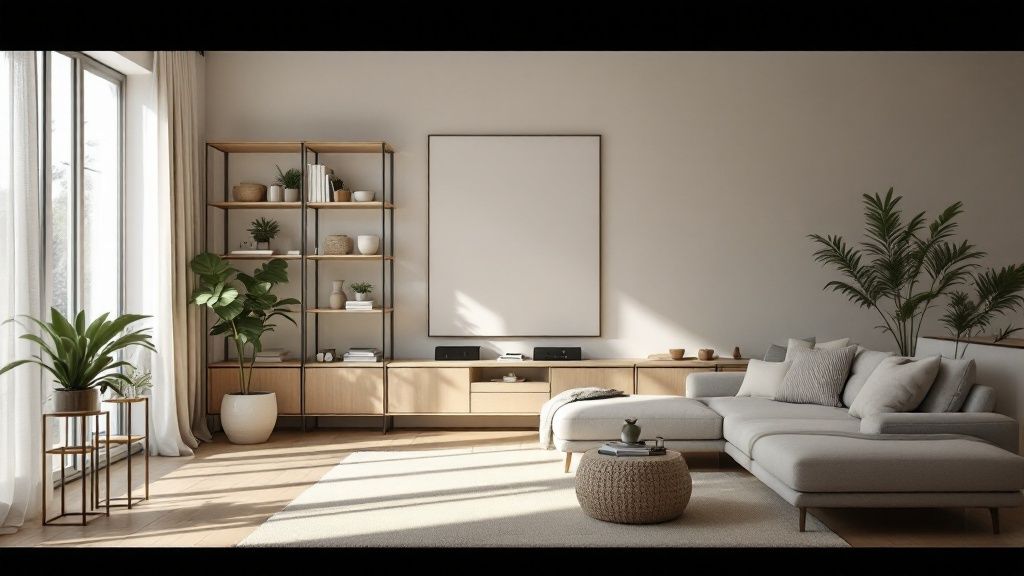
It’s easy to confuse home staging with interior decorating, but they’re two different beasts. Decorating is about personalizing a space to your taste. Staging is pure marketing. The entire goal is to forge an instant, positive emotional connection with buyers the moment they step inside. When someone walks into a thoughtfully staged room, they don’t just see walls and furniture; they see a future life unfolding.
A huge part of this is creating a blank canvas. By packing away family photos, quirky art, and general clutter, you depersonalize the space. This is absolutely critical. It allows buyers to mentally move their own belongings in without feeling like they’re intruding on your life. Suddenly, it stops being your house and starts becoming their potential home.
The Financial Impact of a Great First Impression
Good staging isn’t just about making a home look pretty; it’s a calculated strategy. The real magic is in its ability to highlight your home’s best features while skillfully downplaying any quirks. A small room can be made to feel airy and spacious, a dark corner can be brightened up, and even an awkward layout can suddenly make perfect sense.
This kind of visual merchandising has a direct and powerful impact on your bottom line. Staged properties often sell for 5% to 15% more than their unstaged neighbours. For an even deeper dive into specific strategies, these essential home staging tips for sellers are a fantastic resource.
The core idea is simple: You want buyers to fall in love with the idea of living in your home from the moment they see the online listing or step through the front door.
Ultimately, a well-staged home almost always leads to more showings, quicker offers, and a much stronger negotiating position for you as the seller. It’s an investment that pays for itself.
Before we dive into the room-by-room specifics, let’s quickly review the fundamental concepts that make staging so effective. This table breaks down the core principles we’ll be applying throughout the guide.
Key Staging Principles at a Glance
| Principle | Objective | Impact on Buyer |
|---|---|---|
| Depersonalization | Remove personal items, photos, and unique decor. | Allows buyers to easily envision their own life and belongings in the space. |
| Decluttering | Clear all surfaces, floors, and closets of non-essential items. | Creates a sense of spaciousness, cleanliness, and ample storage. |
| Highlighting Features | Arrange furniture and decor to draw attention to assets like windows, fireplaces, or high ceilings. | Ensures the home’s best qualities are noticed and appreciated immediately. |
| Maximizing Light | Open blinds, use sheer curtains, and add lamps to brighten every room. | Makes rooms feel larger, more inviting, and more cheerful. |
| Creating Flow | Arrange furniture to create clear, easy-to-navigate pathways through the home. | Helps buyers experience the home’s layout logically and functionally. |
Understanding these pillars is the first step. Now, let’s get into the practical, hands-on work of applying them to every corner of your home.
Your Pre-Staging Blueprint: Creating a Blank Canvas
Before you even think about rearranging furniture or buying new cushions, the real work needs to happen. The goal here is simple: create a blank canvas so that potential buyers can walk in and immediately start picturing their own lives in your space. This all starts with two big jobs: decluttering and depersonalizing. It’s about stripping your home back to its bones.
Think of it as getting a head start on packing for your move. The best way I’ve found to do this without getting completely overwhelmed is the three-box method. As you move through a room, grab three boxes and label them: Keep, Donate, and Discard. Go through everything that isn’t essential and put it into one of those boxes. It’s a straightforward system that keeps you from overthinking every little item.
Now, the “Keep” box doesn’t necessarily mean “keep in the house.” Anything you’re keeping but don’t need day-to-day—like that oversized armchair, your winter wardrobe, or sentimental collections—should go into a temporary storage unit. It’s a small investment that pays off big by making your rooms look and feel much more spacious.
Making Your Home Theirs, Not Yours
The next step is to remove your personal stamp from every room. This is crucial. It means taking down the family photos, clearing the kids’ drawings off the fridge, and packing away any collections or memorabilia. While those things make a house your home, they’re a major roadblock for buyers trying to see it as theirs.
This isn’t just my opinion; the numbers back it up. A staggering 83% of buyers’ agents say that staging helps their clients visualize a property as their future home. A neutral space is an invitation for buyers to dream a little.
A buyer should feel like they’ve just discovered a beautiful, well-maintained house—not like they’re intruding on someone else’s life. Removing your personal story is what opens the door to that feeling.
Once you’ve cleared the decks, you’ve set the stage for the most important part: a truly deep clean.
Deep Cleaning for That “Wow” Factor
With the clutter gone, it’s time to make every single surface sparkle. I’m not talking about your average weekend tidy-up. This is a top-to-bottom, military-grade scrub down that screams “this home is well-cared-for” to anyone who walks through the door.
This is a great, simple workflow to follow for each room:
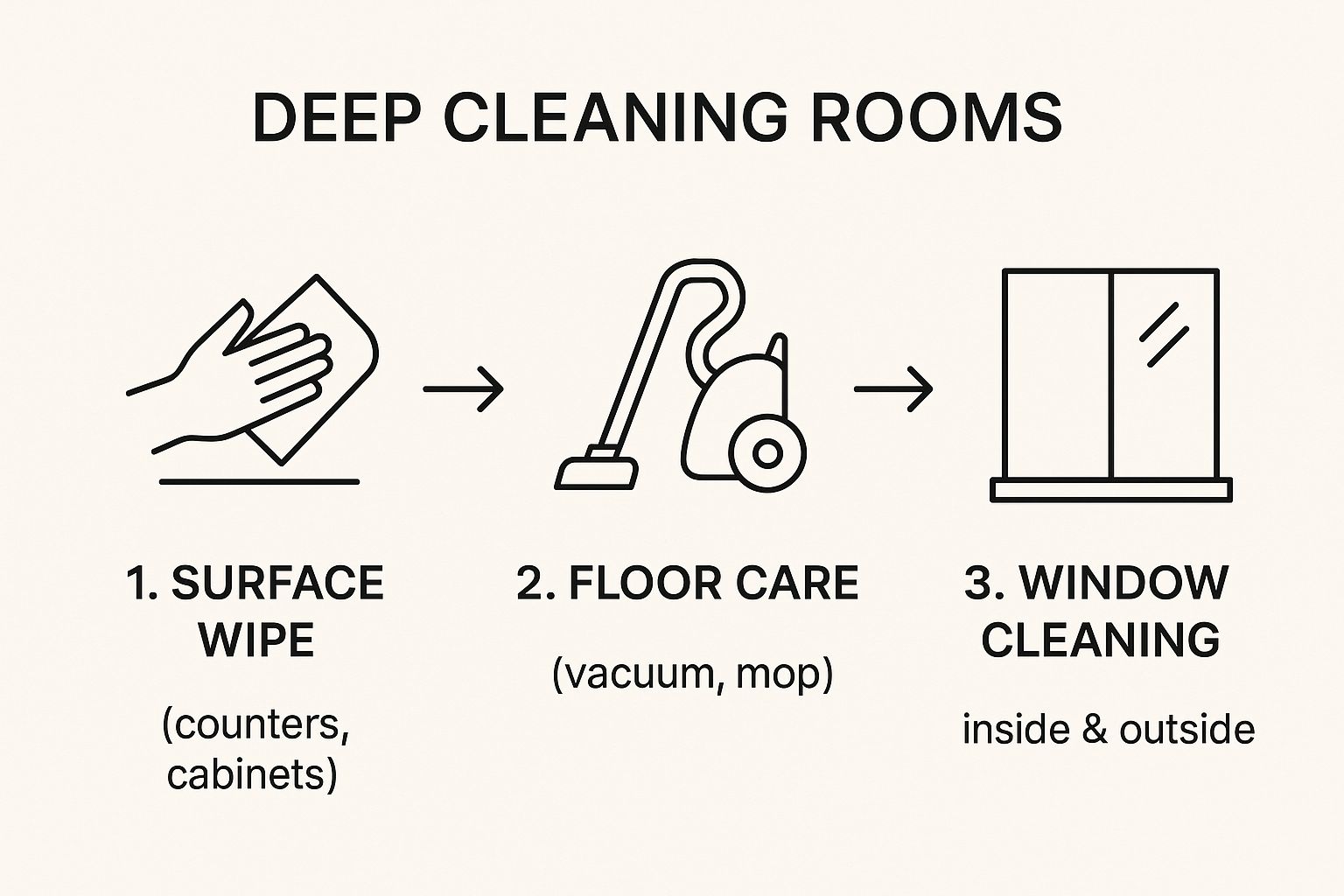
By working from the top down, you ensure you’re not knocking dust and dirt onto surfaces you’ve just cleaned. It just makes sense.
Make sure to focus on the little details that buyers always notice, even if they don’t realize it:
- Baseboards and trim: Get down there and wipe away all the scuffs and dust.
- Light fixtures and switch plates: Clean off all those grubby fingerprints.
- Windows and mirrors: They should be absolutely streak-free to let in as much light as possible.
Your floors are one of the first things people see. If you have carpets, getting them professionally deep cleaned is a must. It’s the only way to get rid of those deep-set stains and lingering odours you’ve probably gone nose-blind to. We’ve put together a guide on how to prepare for a professional carpet cleaning to help you get the best possible results. A truly clean foundation makes every other part of your staging look ten times better.
Arranging Your Rooms to Maximize Space and Flow
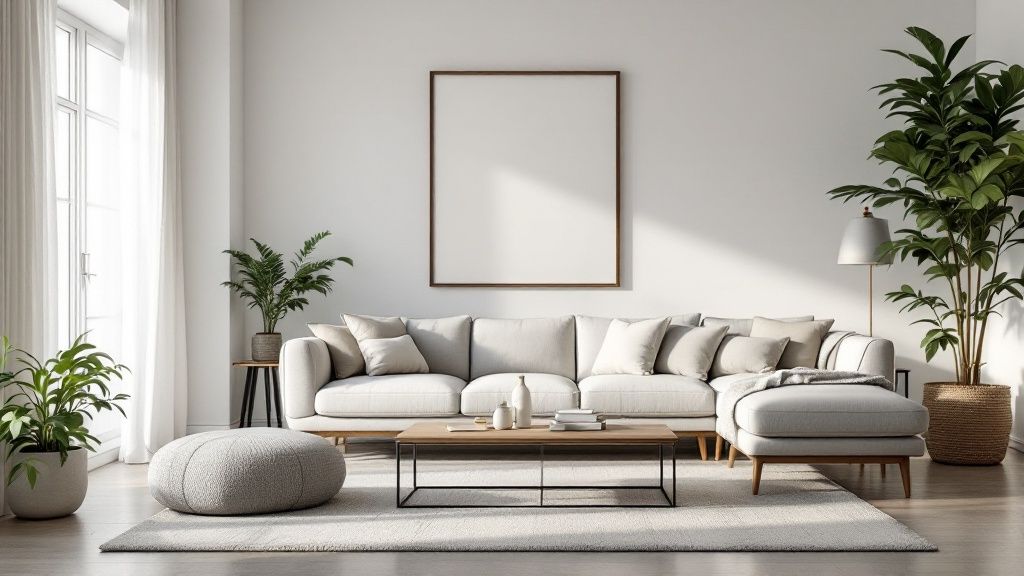
Now that your home is a clean, decluttered canvas, it’s time to think like a designer. The way you arrange your furniture can completely change how a buyer feels about your home. Your mission is to create layouts that make every room feel as spacious as possible while guiding people through the home in a way that feels natural and effortless.
One of the most common mistakes I see is furniture pushed right up against the walls. It’s an understandable instinct—you think you’re opening up the floor space. But in reality, it often makes a room feel static and smaller.
Try pulling your sofa and chairs even just a few inches away from the wall. This simple trick creates a bit of breathing room and, believe it or not, gives the illusion of a larger, airier space. This technique is often called “floating” your furniture, and it works wonders for defining specific zones in a room. Think of creating a cozy conversational area in your living room by grouping a sofa and two armchairs around a coffee table. It doesn’t just look better; it shows buyers exactly how they can live in and enjoy the space.
Give Every Room a Clear Purpose
Buyers need to understand a room’s purpose the moment they walk in. That spare room currently holding a mix of old gym equipment and forgotten hobbies? That’s a huge missed opportunity. You need to give it a single, clear identity.
Stage it as a welcoming guest bedroom, a functional home office, or even a serene yoga space. You’re helping buyers see the full potential of your home’s square footage.
Even the smallest nooks can be transformed. That awkward spot under the stairs could become a charming reading corner with a comfy chair and a lamp. A large master bedroom can feel even more luxurious with a small seating area, suggesting a private retreat for the homeowners. It’s all about selling a lifestyle, not just a house. When you define each space, you help buyers make an emotional connection and picture themselves living there.
Create Clear, Easy Pathways
Think about the journey a potential buyer takes through your home. Can they move from the entryway to the living room and into the kitchen without sidestepping a coffee table or squeezing past a chair? The pathways through your home—what designers call traffic flow—must be clear and unobstructed.
Your goal is to guide visitors on a natural tour. The furniture should direct the flow, not block it. A clear path makes a home feel more spacious and thoughtfully designed.
As a rule of thumb, make sure there are at least two to three feet of walking space in all the main walkways. If a piece of furniture is getting in the way, it has to go. This might mean removing an extra end table or a bulky floor lamp, but a smooth journey through the house leaves a far better impression. If your home is already empty, a thorough deep clean is the final, critical step. Our guide on professional move-out cleaning services has some great tips for making an empty space sparkle.
Don’t just take my word for it—the impact of thoughtful arrangement is huge. Over 90% of realtors believe that staging is key to selling a property effectively, largely because it clarifies a home’s layout and potential. You can discover more home staging statistics that prove just how powerful it is for all types of properties.
Creating Curb Appeal That Invites Buyers In
Long before a potential buyer walks through your front door, they’ve already formed an opinion about your home. That crucial first judgment happens the second they pull up to the curb. This is your home’s first handshake, and it sets the stage for the entire visit.
A beautiful exterior does more than just look nice; it sends a powerful message. It tells buyers that the home is loved and well-maintained. When they see a pristine lawn and a freshly painted door, they instinctively assume the inside has been given the same care. It’s a simple psychological trigger that builds trust and gets them excited to see more.
Thankfully, you don’t need a massive budget to make a huge impact. A few smart, strategic updates can completely overhaul your home’s street-side presence.
High-Impact Exterior Updates
Start with a deep clean. Honestly, one of the best things you can do is rent a power washer for a weekend. Use it to blast away all the built-up dirt and grime from your siding, driveway, walkways, and front porch. You’ll be shocked at the difference it makes—the whole property will look brighter and years younger.
Once everything is sparkling, turn your attention to the details that catch the eye. A fresh coat of paint on the front door in a classic, inviting colour can instantly change the entire vibe of your entryway.
From there, consider these simple but effective upgrades:
- Update House Numbers: Ditch any old, faded numbers for a modern, easy-to-read set. It’s a small touch that adds a surprising amount of polish.
- Upgrade Light Fixtures: Dated porch lights can really age a home. Swap them for something more current, and make sure they’re clean with bright, working bulbs.
- Clean the Windows: Nothing says “well-cared-for” like sparkling windows. Clean them inside and out to make the home look maintained and let that beautiful natural light pour in.
A buyer’s first impression is formed in seconds. A clean, inviting exterior tells them this is a home worth seeing, making them eager to discover what’s inside.
Landscaping for a Polished Look
Your yard is the other half of the curb appeal equation. You don’t need to hire a landscape architect; consistent, simple maintenance is what really counts. Start with the basics: mow the lawn, pull every last weed, and trim back any unruly shrubs or tree branches, especially if they’re blocking windows or walkways.
Here’s a pro tip: add a fresh layer of dark mulch to all your garden beds. It’s a cheap and incredibly effective way to make your plants and flowers pop against a rich, clean backdrop. For an extra dose of charm, place a few pots of colourful seasonal flowers near the entryway.
Finally, don’t overlook your front porch itself. A new, stylish doormat is non-negotiable. If you have an outdoor rug, make sure it’s immaculate. Our guide on area rug cleaning pointers has some great tips that work for outdoor rugs, too. By pulling all these elements together, you create a first impression so irresistible that buyers will be falling for your home before they even turn the doorknob.
Putting the Finishing Touches on With Lighting and Decor
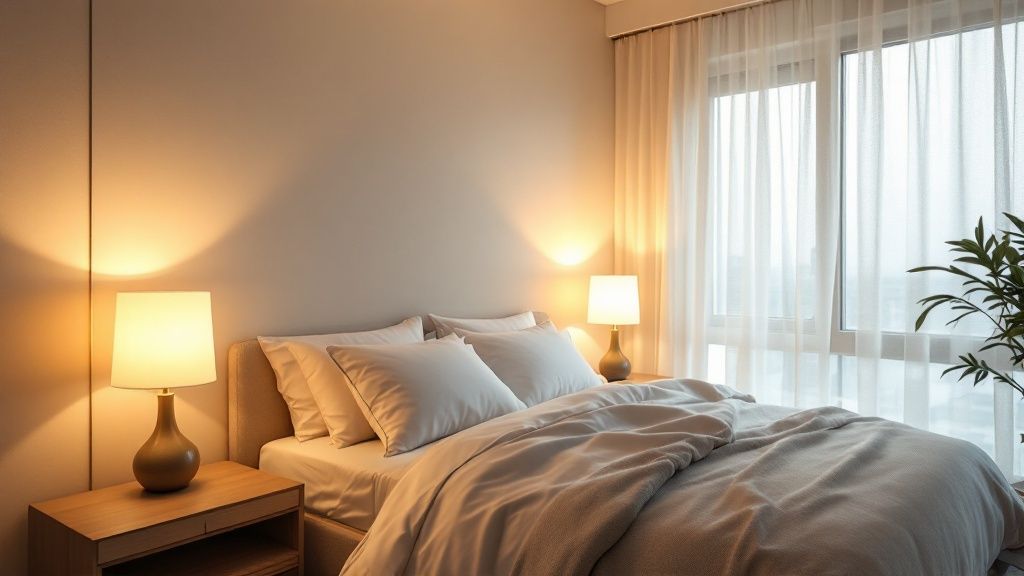
You’ve done the hard work of decluttering, cleaning, and arranging furniture. Now comes the part that ties it all together and makes buyers fall in love: the finishing touches. This is where you use lighting and decor to create a mood, making your house feel like a stylish, welcoming home they can’t wait to move into.
Think of it this way—these final details are what separate a clean, empty house from a must-have property.
Bad lighting is a deal-breaker. It can shrink a spacious room, making it feel gloomy and uninviting. Your mission is to make every part of your home look bright, airy, and cheerful. The best way to pull this off is by layering your lighting, mixing different sources to create a warm and balanced glow that looks fantastic in person and in photos.
A Three-Layer Plan for Flawless Lighting
Relying on a single overhead light just won’t cut it. A properly staged room feels dynamic because it uses a combination of light sources to kill shadows and create warmth.
Here’s the simple, three-part strategy the pros use:
- Ambient Light: This is your primary light source, like the main ceiling fixture or pot lights. The key here is consistency. Make sure every bulb is the same colour temperature (soft white is almost always the right choice) and replace any that are flickering or dim.
- Task Light: These are the functional lights, like a reading lamp next to a comfy chair, a desk lamp, or under-cabinet lighting in the kitchen. They do more than just illuminate a task; they help buyers picture themselves actually living in the space—prepping dinner or curling up with a good book.
- Accent Light: Now for the fun stuff. Use smaller, stylish lamps to draw attention to your home’s best features, whether it’s a piece of art, a cool architectural detail, or just a dark corner that needs a little love. This final layer adds a real sense of depth and character.
And don’t forget the outside! The impression your home makes shouldn’t stop at sunset. Consider exploring effective outdoor lighting techniques to boost your curb appeal after dark.
Pro Tip: A good rule of thumb I always follow is to aim for about 100 watts of light for every 50 square feet. This ensures a room feels bright and expansive, eliminating any dark corners.
Picking Decor That Helps You Sell
With the lighting dialled in, it’s time to add a bit of personality—just not your personality. Staging decor is all about universal appeal. You want pieces that are tasteful, neutral, and speak to a wide range of buyers, adding style without creating clutter.
Start with textiles. You’d be amazed what a few new, plush cushions in a solid neutral or a simple pattern can do for an older sofa. A soft throw blanket draped casually over the arm of a chair or folded at the end of a bed adds an instant layer of cozy texture.
Mirrors are another essential tool in any stager’s kit. Placing a large mirror on a wall opposite a window is a classic trick for a reason: it bounces light all over the room, making it feel twice as big and bright.
Finally, bring the outside in. A touch of greenery adds life and a pop of natural colour to any space. A small succulent on a coffee table, a vase of fresh flowers on the kitchen island, or a trendy fiddle-leaf fig in an empty corner can make a room feel fresh and vibrant. Just remember, less is more. A few well-chosen plants are all it takes.
To make this even easier, here’s a quick checklist you can use as you go through your home.
Room-by-Room Staging Checklist
This table breaks down the essential staging actions for the most important areas of your home, helping you stay organized and focused.
| Room | Key Action Items | Pro Tip |
|---|---|---|
| Living Room | – Arrange furniture to create conversation areas. – Add neutral cushions and a cozy throw. – Place a large mirror opposite a window. | Pull furniture away from the walls. Even a few inches of space can make the room feel much larger. |
| Kitchen | – Clear 100% of clutter from countertops. – Style with a bowl of fresh fruit or a vase of flowers. – Ensure under-cabinet lighting is working. | A new, clean tea towel hanging from the oven handle is an inexpensive touch that makes a big difference. |
| Bedrooms | – Use fresh, neutral bedding (white is always a winner). – Add matching lamps to both bedside tables. – Ensure closets are only 50% full to look spacious. | Layering pillows (sleeping pillows, shams, and a decorative one) makes the bed look luxurious and inviting. |
| Bathrooms | – Put out fresh, fluffy white towels. – Hide all personal toiletries (toothbrushes, etc.). – Place a small plant or orchid on the vanity. | A new shower curtain is one of the cheapest and most effective upgrades you can make in a bathroom. |
| Dining Area | – Set a simple, elegant table setting for 4-6 people. – Ensure the chandelier is clean and centred. – Remove any extra leaves from the table to maximize space. | A simple centrepiece, like a row of three small vases or candles, looks more modern than one large arrangement. |
Following this checklist will ensure you haven’t missed any of the small but crucial details that help buyers connect emotionally with your home.
Your Top Home Staging Questions, Answered
When you start thinking about staging, it’s natural for a million questions to pop into your head. From budget worries to the reality of keeping a place picture-perfect with kids and pets around, it can feel like a lot. Let’s clear up some of the most common concerns so you can get started with confidence.
Do I Really Need to Hire a Professional?
This is probably the number one question I get. The honest answer? It depends.
If you have a knack for design and are ready to roll up your sleeves, you can absolutely achieve fantastic results on your own. It’s all about following the principles of decluttering, depersonalizing, and creating a great flow.
That said, there are times when calling in a pro is a game-changer. If you’re dealing with a completely vacant home, for example, a professional stager has the furniture and decor inventory to breathe life into those empty rooms. They also have a trained eye for tricky layouts, helping buyers see a room’s potential, not its problems.
What’s a Realistic Staging Budget?
You don’t need to drain your bank account to make a huge impact. The key is to be strategic and focus on high-impact updates that give you the most return for your money. Think smart, not expensive.
Here are a few affordable upgrades that pack a serious punch:
- A fresh coat of neutral paint: This is a non-negotiable. It’s the fastest way to make any space feel brighter, cleaner, and brand new.
- Plush new towels: A simple stack of fluffy, white towels can give any bathroom an instant spa-like vibe.
- Updated hardware: You’d be amazed what swapping out dated cabinet pulls, light fixtures, or doorknobs can do. It’s a quick and relatively cheap fix.
- Pops of green: A few well-placed houseplants or a simple vase of fresh flowers adds life, colour, and energy.
Remember, staging isn’t about a complete overhaul. It’s about making smart, targeted improvements that help buyers fall in love with the space. A small, well-spent budget can make all the difference.
How Do I Stage a Home with Kids and Pets?
It’s definitely possible, but it does take a little extra strategy. Living in a staged home is all about creating a system for quick clean-ups when you get that “we’ll be there in 20 minutes!” call for a viewing.
Your new best friends are decorative storage bins and baskets. Keep one in every main living area. When it’s showtime, do a quick sweep of the room and toss in toys, dog leashes, and daily clutter. You can then pop the baskets into a closet or even your car trunk right before you leave.
For pet owners, being extra vigilant about cleanliness is crucial. Deep cleaning carpets and furniture to eliminate any lingering odours is a must. If you’re struggling, our guide has some essential tips to prevent pet stains and keep your home clean that can be a real lifesaver.
Learning how to stage your home for sale is a temporary hustle, but it leads to a much bigger reward in the end.
At SaraCares, we know that a truly clean home is the perfect canvas for successful staging. Our professional carpet and upholstery cleaning services will ensure your property looks and smells its absolute best. Request a free quote today and let’s work together to create an irresistible first impression.


